
Iris Zimmermann · 26 September 2026
Data Protection Strategies Using Automated Backup Protocols in Advanced CMS Environments
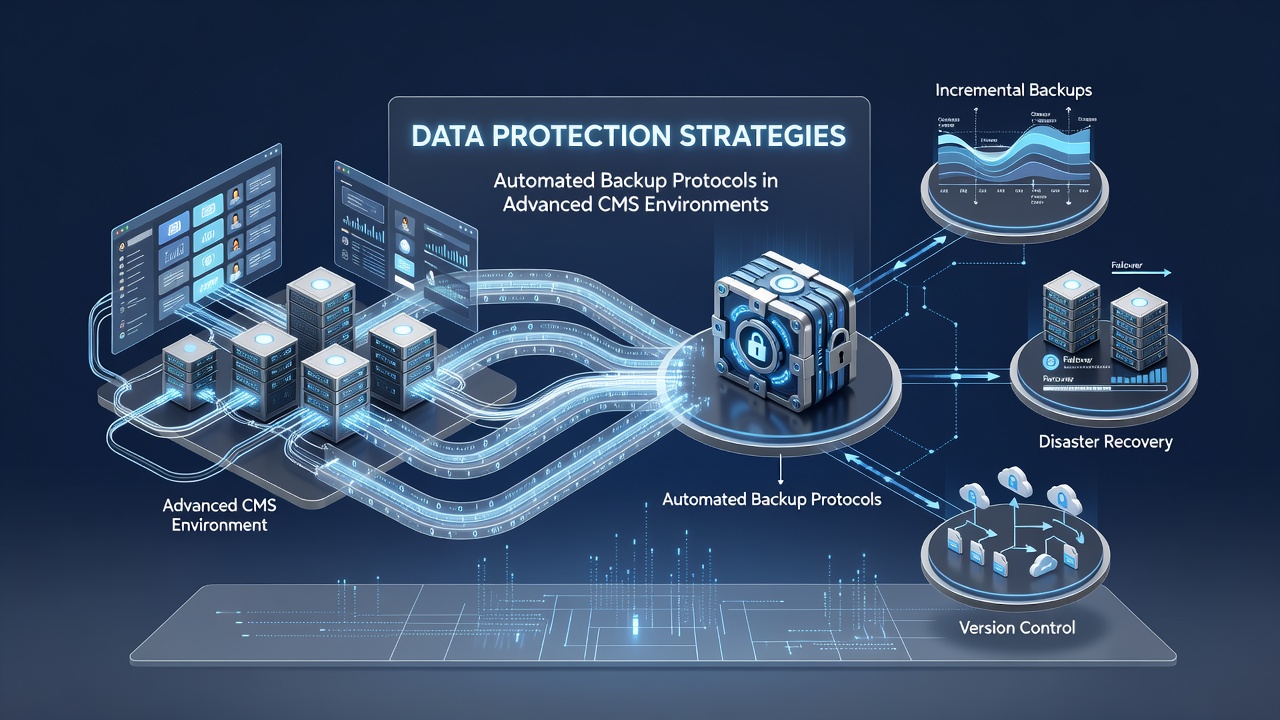
Advanced content management systems handle large volumes of structured and unstructured data daily, which makes reliable protection essential for operational continuity. Automated backup protocols form the core of these strategies by scheduling data copies without manual intervention, reducing human error rates that studies from research institutions have linked to over 60 percent of data loss incidents. Organizations deploy these protocols across platforms such as enterprise Drupal installations and custom headless CMS setups, where content updates occur in real time across distributed servers. Protocols typically include incremental backups that capture only changed files since the last cycle, differential backups that record all modifications since the most recent full backup, and continuous data protection methods that replicate changes almost instantly. Data indicates that incremental approaches cut storage demands by up to 70 percent compared with daily full backups, according to benchmarks published by the National Institute of Standards and Technology. These methods integrate directly with CMS databases and file systems through APIs, allowing seamless operation even during peak traffic periods. Implementation begins with assessment of data criticality levels, followed by selection of retention policies that align with regulatory frameworks. Administrators configure encryption at rest and in transit using AES-256 standards, then establish offsite replication to geographically separated locations. In advanced environments, scripts trigger backups based on event-driven triggers such as content publication or user-generated uploads rather than fixed time intervals. This approach minimizes performance impact while maintaining version histories that support rapid point-in-time recovery.Integration with Cloud and Hybrid Infrastructures
Cloud storage services now serve as primary targets for automated CMS backups because they offer scalable capacity and built-in redundancy. Hybrid models combine on-premises appliances with public cloud buckets, creating layered protection that withstands both localized hardware failures and regional outages. Research from Canadian government cybersecurity reports highlights that organizations using hybrid automated protocols recovered 95 percent of data within four hours during simulated disaster scenarios in 2025 testing cycles.
Advanced CMS platforms incorporate native plugins or modules that interface with services such as Amazon S3 or Azure Blob Storage, applying lifecycle rules that automatically tier older backups to lower-cost archival storage. Scheduling tools within these systems allow administrators to define exclusion lists for temporary cache files, which prevents unnecessary data duplication. Monitoring dashboards track backup success rates and alert teams via integrated notification channels when anomalies appear, such as incomplete transfers or checksum mismatches.
Security Considerations and Compliance Alignment
Automated protocols incorporate access controls that restrict backup management to authorized roles only, using multi-factor authentication and audit logging to record every operation. Encryption keys remain separate from the data stores themselves, following zero-trust principles outlined in international standards. By September 2026, many regulatory updates across the European Union and Australia require documented proof of automated backup testing at least quarterly, pushing CMS providers to embed verification routines directly into their administrative interfaces.
Testing procedures involve periodic restoration drills that validate both data integrity and application functionality after recovery. Observers note that organizations conducting these drills quarterly experience 40 percent fewer extended outages than those relying solely on automated success notifications. Versioning within backup repositories further supports compliance audits by preserving historical snapshots that demonstrate adherence to data retention mandates over multi-year periods.
Performance Optimization in High-Traffic Scenarios
Bandwidth throttling features prevent backup processes from competing with live user requests, while deduplication algorithms identify and eliminate redundant blocks before transmission. In environments supporting millions of daily page views, these optimizations maintain sub-second response times even when full database exports run concurrently. Industry analyses from academic sources reveal that properly tuned automated systems reduce overall infrastructure costs by streamlining storage growth patterns.
Integration with container orchestration platforms allows backup containers to spin up on demand and shut down immediately after completion, conserving compute resources. Database-specific agents handle large content repositories by performing hot backups that lock tables only briefly, avoiding downtime during business hours. These technical refinements ensure that data protection remains invisible to end users while delivering measurable reliability gains.
Conclusion
Automated backup protocols continue to evolve alongside CMS architectures, incorporating machine learning elements that predict optimal backup windows based on historical usage patterns. Organizations that adopt layered strategies combining incremental replication, encryption, and regular validation maintain stronger positions against data threats. Evidence from multiple regulatory regions shows consistent improvement in recovery outcomes when these protocols operate under documented governance frameworks rather than ad-hoc configurations. The combination of technical controls and procedural discipline delivers the resilience required in contemporary digital operations.